



This article explains what a derating factor is in electrical and renewable energy systems and why it directly affects safety, performance, and compliance. You will learn how the factor is applied, what causes it, and how professionals can manage it in real projects.
What is a Derating Factor?
A derating factor is a numerical reduction applied to the nominal rating of electrical equipment to ensure safe and reliable operation under real operating conditions.
Derating exists because electrical components are almost never operated under ideal laboratory conditions. Ambient temperature, installation method, grouping of conductors, altitude, and load profile all influence how heat is generated and dissipated. Without the factor, components such as cables, inverters, transformers, or breakers may exceed thermal limits, leading to insulation degradation, accelerated aging, or failure.
The factor is applied whenever operating conditions differ from standard reference conditions defined by manufacturers or standards bodies. In practice, this means almost all field installations require some form of derating. Engineers must apply these factors during design to ensure compliance with standards, long term reliability, and system safety.
Technical Causes of the Factors
The primary drivers behind the factor are linked to thermal, environmental, and operational constraints.
- Elevated ambient temperature reducing heat dissipation
- Cable grouping or bundling increasing conductor temperature
- Installation method such as conduit, tray, or direct burial
- High altitude reducing air density and cooling efficiency
- Continuous or cyclic loading profiles
- Equipment aging and material degradation
Taxonomy of Derating Factor Types
Thermal factor
Thermal derating accounts for ambient temperature higher than the reference temperature. As temperature rises, conductor resistance increases and insulation limits are approached more quickly.
Here are Temperature Adjustment Factors Based on Braid Alloy.
Installation and Grouping Derating
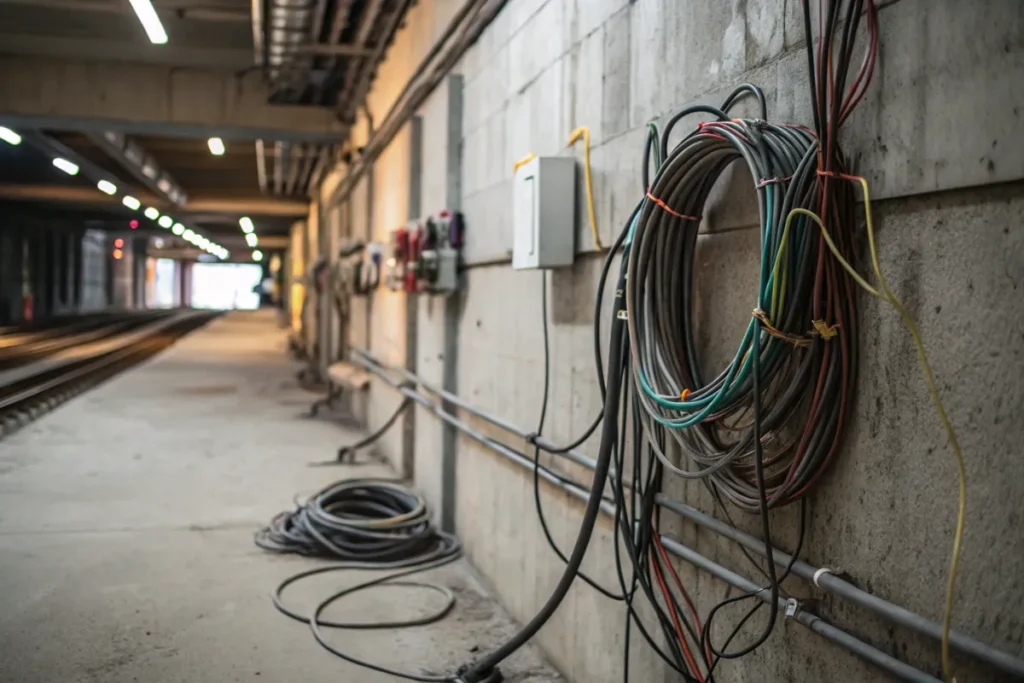
When multiple cables are installed together, heat accumulation reduces current carrying capacity. Standards provide grouping coefficients to adjust allowable current.
Environmental Factor
Environmental conditions such as altitude, humidity, dust, or solar exposure affect cooling efficiency and component lifespan, particularly for outdoor renewable systems.
Equipment Specific Derating
Manufacturers specify derating curves for inverters, transformers, and power electronics based on temperature, voltage, or switching frequency.
Operational Factor
Operational derating considers duty cycle, load variability, and harmonic distortion, especially in systems with power electronics and variable loads.
Problem Context for Industry Professionals
Derating presents a direct design challenge because it reduces usable capacity while increasing system cost. Undersizing risks overheating and non compliance, while oversizing increases capital expenditure and space requirements. In renewable energy projects, improper factor can lead to inverter clipping, reduced energy yield, or premature component failure.
For engineers, EPC contractors, and developers, the factor must be balanced against performance guarantees, grid codes, and financial models. Errors in the factor assumptions often surface late during commissioning or operation, when corrective actions are costly.
Solutions and Professional Best Practices
Effective derating management starts with early stage design integration. Engineers should always apply the most conservative applicable standards and manufacturer data while validating assumptions with site specific conditions.
- Key mitigation strategies include
- Optimizing cable routing and spacing to improve cooling
- Selecting equipment with higher thermal tolerance
- Using dynamic ratings where allowed by standards
- Improving ventilation or active cooling for enclosed systems
- Validating designs with simulation and thermal studies
By integrating derating analysis into digital design and simulation tools, professionals can optimize system capacity while maintaining safety margins. This transition from rule based sizing to data driven design enables better performance and lower lifecycle risk.