



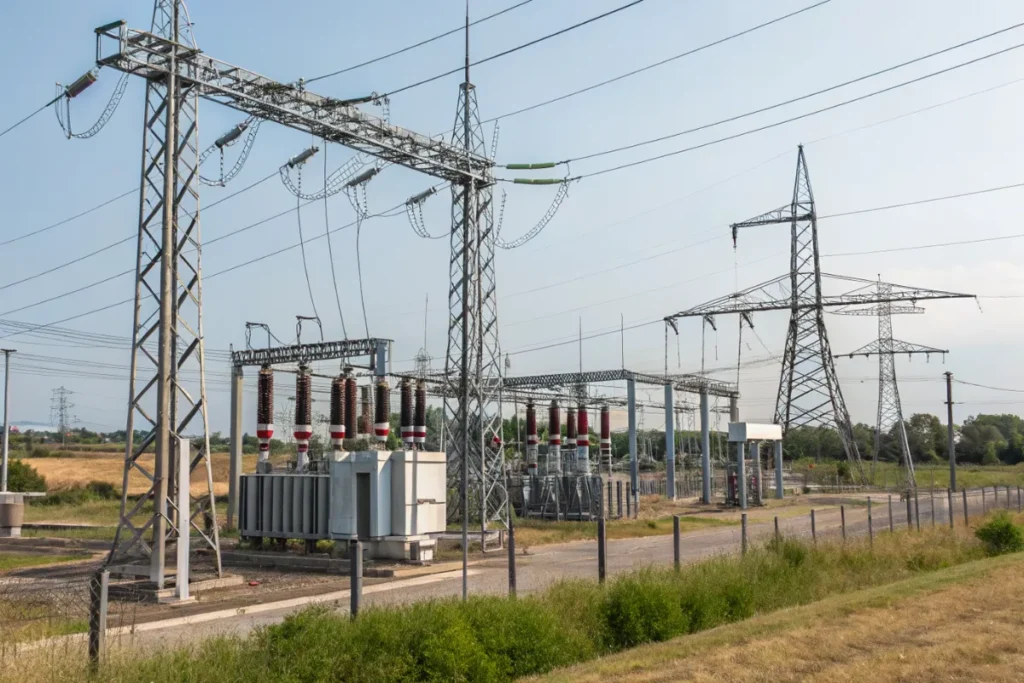
Grid congestion limits how much electricity can flow through transmission and distribution networks during high demand or high generation periods. This article explains why congestion occurs, how it affects renewable integration, and how engineers reduce its impact.
What is Grid Congestion?
Grid congestion occurs when power flows exceed the safe capacity of transmission or distribution lines, forcing operators to limit electricity transfer.
Congestion appears when electricity demand or renewable generation rises faster than grid infrastructure. Lines reach thermal, voltage, or stability limits. Operators must reroute power, curtail generation, or raise market prices to protect equipment.
It becomes frequent in regions with high solar and wind penetration. Renewable plants often sit far from load centers. Transmission expansion moves slowly. As a result, clean energy remains stranded while other plants ramp up closer to demand.
Network Bottlenecks Explained
- Limited transmission capacity in aging networks
- Rapid renewable generation growth
- Peak demand spikes during heat waves or cold fronts
- Poor geographic match between generation and loads
- Outages of critical lines or substations
- Insufficient grid reinforcement planning
Congestion Mechanisms in Power Grids
Transmission Congestion
Long distance high voltage lines reach thermal or stability limits during heavy flows.
Distribution Congestion
Local feeders overload due to EV charging, rooftop solar export, or dense urban demand.
Temporal Congestion
Short term peaks overwhelm capacity during specific hours or seasons.
Structural Congestion
Chronic bottlenecks caused by undersized or poorly located infrastructure.
Why Grid Congestion Challenges the Energy Industry
- Congestion forces renewable curtailment. Clean energy production drops.
- Power prices spike in constrained zones. Consumers pay more.
- Utilities face equipment overheating and faster asset aging.
- Grid planners struggle to connect new solar, wind, and battery projects.
- Regulators push for faster interconnection while safety margins shrink.
Solving Network Bottlenecks
- Engineers expand transmission corridors in high growth regions.
- They deploy dynamic line rating to unlock hidden capacity.
- Grid operators use advanced power flow control devices.
- Battery storage absorbs excess generation during peaks.
- Smart forecasting improves dispatch decisions.
Digital grid simulation now allows congestion prediction across thousands of network scenarios. This approach helps utilities prioritize upgrades and optimize renewable integration before failures occur.
In Europe, the ENTSO-E coordinates grid development plans to reduce cross border congestion.