



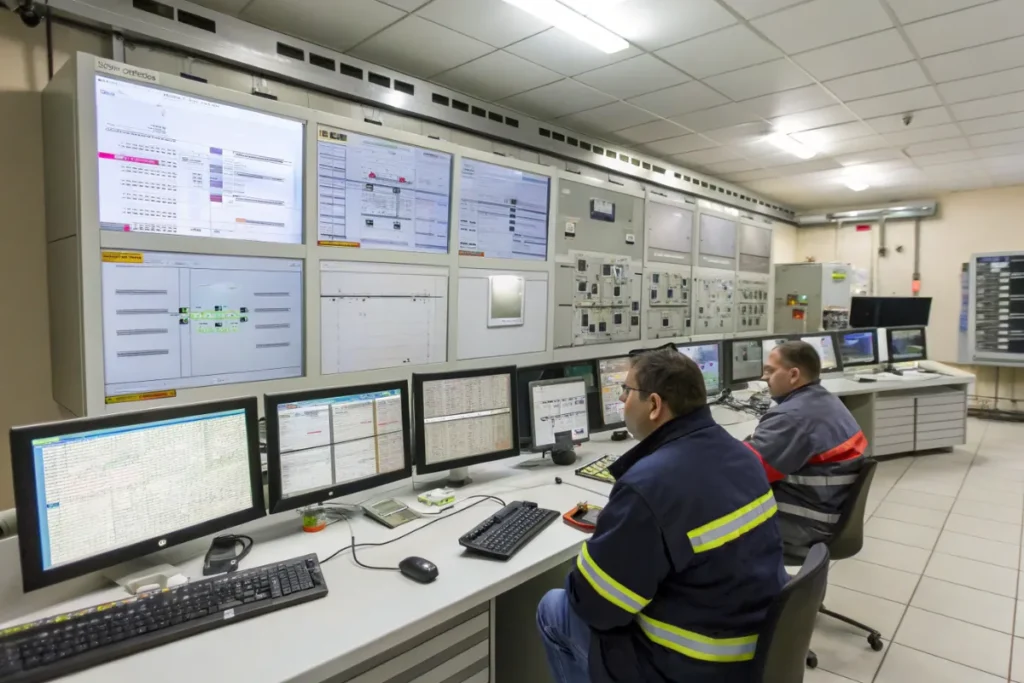
Frequency regulation keeps power system frequency stable by balancing generation and demand in real time. This article explains how it works, why it matters, and how engineers maintain grid stability in modern systems.
What is Frequency Regulation?
Frequency regulation is the real time control of power system frequency by continuously balancing electricity generation and consumption.
Power systems operate at a fixed nominal frequency such as 50 Hz or 60 Hz. Any imbalance between supply and demand causes frequency to deviate. If generation exceeds load, frequency rises. If demand exceeds supply, frequency drops. Even small deviations can damage equipment or trigger protection systems.
Frequency regulation becomes critical in systems with high renewable penetration. Solar and wind reduce system inertia because they connect through power electronics. Lower inertia means frequency changes faster after disturbances. Operators must react faster and with more precision.
Root Causes of Frequency Instability
- Sudden loss of generation units
- Rapid load variations or demand spikes
- Low system inertia due to inverter based resources
- Forecast errors in renewable generation
- Transmission constraints limiting power flow
- Delays in control response or dispatch signals
Frequency Response Mechanisms
Primary Frequency Control
Automatic and immediate response from generators. It stabilizes frequency within seconds using governor action.
Secondary Frequency Control
Centralized control adjusts generation to restore nominal frequency. It operates over seconds to minutes through automatic generation control.
Tertiary Frequency Control
Manual or economic dispatch actions rebalance reserves. It ensures long term system adequacy.
Fast Frequency Response
Battery storage and inverter based resources respond within milliseconds. This layer becomes essential in low inertia grids.
Why Frequency Regulation Challenges the Energy Industry
- Renewable integration reduces system inertia. Frequency becomes more volatile.
- Traditional generators retire. Fewer synchronous machines provide natural frequency support.
- Grid operators must manage faster disturbances with tighter margins.
- Protection systems risk unnecessary trips during rapid frequency swings.
- Market structures often fail to value fast response services properly.
Advanced Grid Control Strategies
- Engineers deploy battery energy storage systems for fast response.
- They implement synthetic inertia through inverter controls.
- Grid operators enhance forecasting for load and renewable output.
- They redesign ancillary service markets to reward fast frequency response.
Advanced digital simulations now model frequency dynamics under high renewable penetration. These tools allow engineers to test scenarios and design optimal control strategies before deployment.
A modern grid requires coordinated control between generation, storage, and demand. Engineers must integrate these assets into a unified frequency response strategy.