



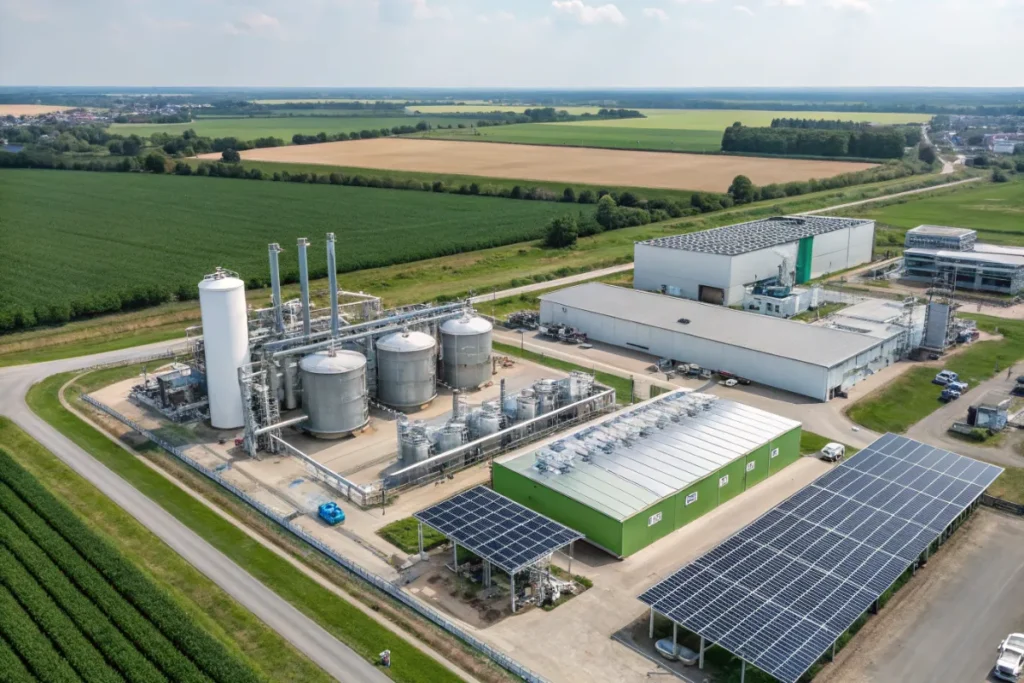
This article explains how an alkaline electrolyzer produces hydrogen and why it remains a core technology in the hydrogen economy. You will learn its operating principles, technical drivers, and engineering challenges.
What is an alkaline electrolyzer?
An alkaline electrolyzer is a hydrogen production system that splits water into hydrogen and oxygen using an alkaline electrolyte and electric current.
Engineers use alkaline electrolyzers because they offer proven durability, simple materials, and large scale operating capability. The system circulates an alkaline solution, typically potassium hydroxide, between two electrodes separated by a diaphragm. Electricity drives hydrogen evolution at the cathode and oxygen evolution at the anode.
This technology becomes essential when industries need continuous hydrogen supply at industrial scale. Power plants, refineries, fertilizer production, and emerging green hydrogen projects rely on alkaline systems due to long operating lifetimes and lower capital cost compared to newer technologies.
Technical Drivers of Alkaline Electrolysis
Several engineering factors shape system performance and economics.
- Electricity price and availability
- Electrolyte concentration and temperature
- Electrode material and surface area
- Current density and operating voltage
- Gas separation efficiency
- Cooling and water purity
Electrolyzer Design Approaches
Atmospheric Alkaline Electrolyzer
These systems operate near ambient pressure. They use simpler equipment and lower capital cost. Engineers often select them for steady industrial hydrogen demand.
Pressurized Alkaline Electrolyzer
These systems produce hydrogen at elevated pressure. They reduce downstream compression energy. They require stronger cell structures and tighter sealing.
Modular Alkaline Electrolyzer
Manufacturers design these units in scalable blocks. Developers combine modules to reach large hydrogen capacities. This approach improves deployment flexibility.
Engineering Barriers to Scale
Alkaline electrolyzers respond slowly to fluctuating power input. This behavior limits direct coupling with variable renewable energy. High current density increases efficiency loss and gas crossover risk.
Engineers also face system size, electrolyte handling, and material corrosion concerns. Large footprint requirements increase balance of plant cost. Gas purity control remains critical for downstream applications.
Optimizing Alkaline Electrolyzer Systems
Professionals improve system performance through design integration and operational control. They optimize temperature, pressure, and current density to reduce losses.
Key improvement strategies include
- Pairing systems with stable renewable or hybrid power supply
- Improving electrode coatings for higher reaction rates
- Enhancing diaphragm materials for better gas separation
- Using waste heat recovery
- Implementing smart power control systems
By treating electrolyzers as dynamic energy assets instead of static equipment, professionals unlock higher efficiency and lower hydrogen production cost.