





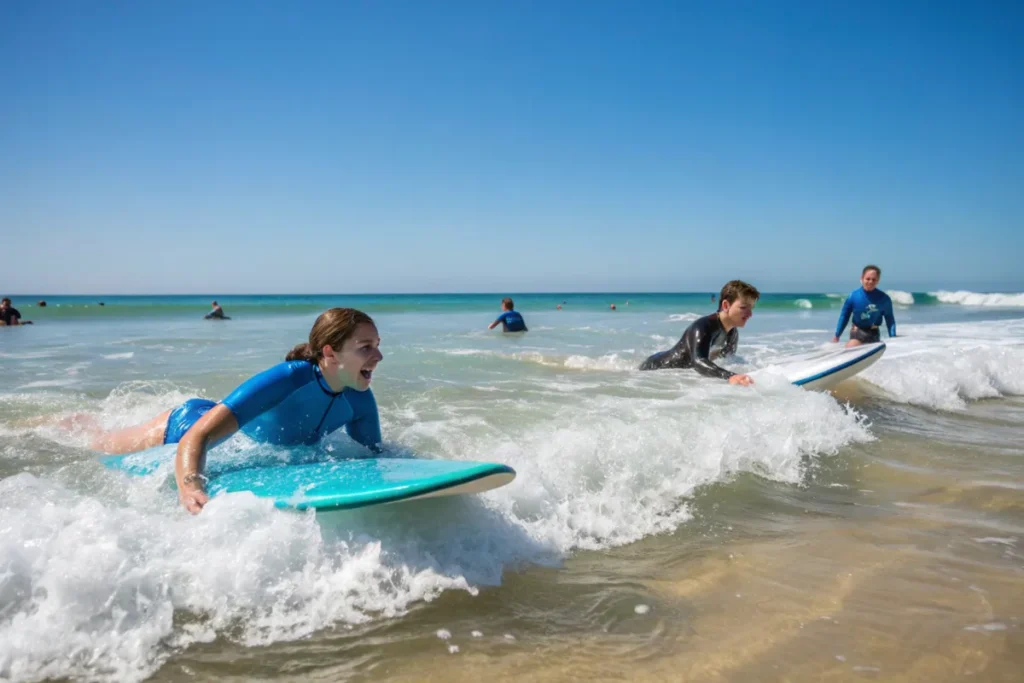
Your first surf session will feel humbling, tiring, and a little chaotic. You will fall, miss waves, and question your balance. That is part of the process. Surfing rewards patience, consistency, and awareness.
The payoff is powerful. Surfing improves strength, endurance, and mental focus. It connects you to nature and builds confidence over time. Every wave you catch will feel earned.
Essential Gear: What You Really Need to Start
Choosing the Right Beginner Surfboard
Your board choice defines your learning curve. Start with a foam board or soft top between 7’6 and 9’0 feet. These boards provide high buoyancy and stability. They forgive mistakes and reduce injury risk.
Focus on volume, measured in liters. Higher volume keeps you afloat and helps you catch waves earlier. Beginners often need 60 to 80 liters depending on body weight.
A low volume board will slow your progress. You will struggle to paddle and miss waves.
Wetsuit, Wax, and Leash Essentials
Water temperature determines your wetsuit choice. A 3/2mm wetsuit works well in temperate conditions. Colder water requires thicker suits.
You also need:
- Surf wax to prevent slipping
- A leash to keep your board attached
- A rash guard for comfort in warm water
Do not skip these basics. They improve safety and control.
Preparation and Forecasts: Reading the Ocean
How to Find a Beginner Friendly Spot
Start at a beach break with a sandy bottom. Avoid reefs and rocks. Look for waves that break gently and consistently.
Choose less crowded spots. You will feel more comfortable and safer.
Understanding the Surf Forecast
A good surf forecast helps you pick the right conditions.
Key metrics:
- Swell height: Aim for 1 to 3 feet as a beginner
- Tides: Mid tide often works best for learning
- Wind direction: Offshore wind creates clean waves. Onshore wind makes waves messy
Check forecasts daily. Patterns will start to make sense over time.
Step by Step: How to Surf
Practice on Land First
Learning how to pop up on land builds muscle memory.
Follow this sequence:
- Lie flat on your board
- Place your hands flat under your chest
- Push your upper body up
- Bring your back foot forward first
- Bring your front foot forward
- Land in a low crouch with bent knees
Keep your movements fast and controlled. Avoid hesitation.
Execute the Pop Up in the Water
Once in the water, timing matters.
- Paddle with deep, strong strokes
- Find the sweet spot on your board
- Too far forward causes nosediving
- Too far back slows you down
As the wave lifts you, commit to the pop up. Do not pause halfway.

Ocean Skills: Building Confidence in the Water
Getting Past Waves with the Turtle Roll
You must reach the lineup. Waves will break in front of you.
Use the turtle roll with a high volume board:
- Hold the rails firmly
- Flip the board upside down as the wave hits
- Stay tight and let the wave pass
- Flip back and continue paddling
This technique saves energy and keeps control.
Catching Your First Waves
Start in the whitewash. These are already broken waves.
- Face the shore
- Paddle early
- Feel the push of the wave
Once comfortable, move to green waves. These waves have not broken yet. They require better timing and positioning.
Common Mistakes and How to Fix Them
Pearling or Nosediving
This happens when the front of your board dips underwater.
Cause: Poor weight distribution
Fix: Shift slightly back and adjust your chest position
Standing in Stages
Many beginners go to their knees first. This slows you down.
Fix: Pop up in one smooth motion
Looking Down
Looking at your board affects balance.
Fix: Look forward where you want to go
Poor Paddle Technique
Short, weak strokes reduce speed.
Fix: Use deep, long strokes and keep your body aligned
Surf Etiquette: Respect the Lineup
Right of Way Rules
The surfer closest to the peak has priority. Respect this rule at all times.
If someone is already riding the wave, do not interfere.
Never Drop In
Dropping in means taking off on a wave someone else is already riding. This creates danger and frustration.
Always check both directions before paddling.
Do Not Ditch Your Board
Throwing your board can injure others.
Hold onto it or control it during wipeouts.
Respect Builds Community
Good surf etiquette earns respect. It keeps everyone safe and improves your experience in the water.
FAQ: Quick Answers for Beginners of How to Surf
No. Many people start later and progress well. Consistency matters more than age.
A “kook” is a beginner who lacks awareness. Everyone starts here. Stay humble and keep learning.
Yes, in whitewash or with strong waves. However, paddling gives you control and positioning.
How to Surf: Your First Wave Starts Now
Surfing challenges you physically and mentally. Progress feels slow at first, but every session builds skill and confidence.
Start with the right beginner surfboard, learn how to read the surf forecast, and practice how to pop up consistently. Respect the ocean and follow surf etiquette.
Commit to regular sessions. Stay patient. Your first clean ride will make everything worth it.
Grab your board, check the forecast, and book your next session. Progress comes from time in the water.